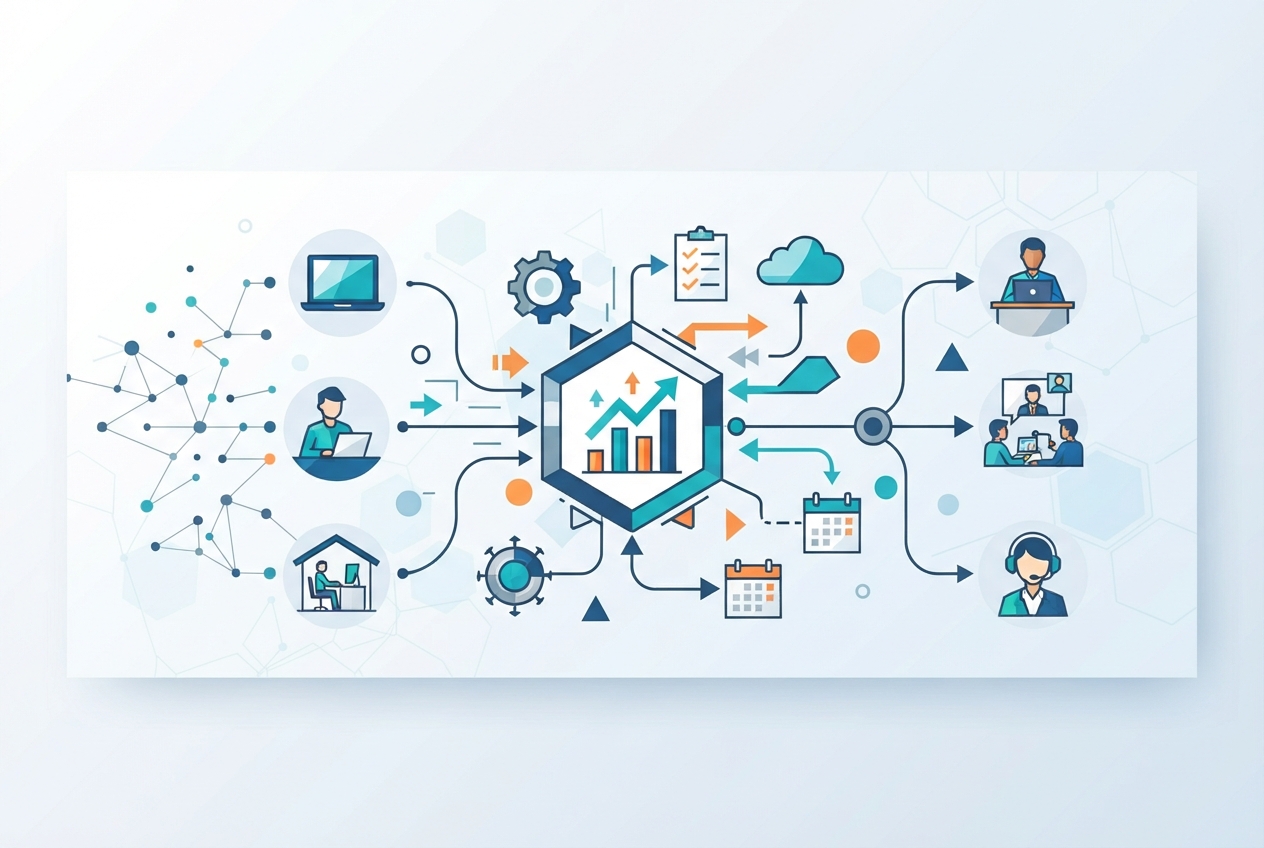
Businesses are constantly looking for ways to improve productivity, reduce operational expenses, and simplify everyday processes. One approach involves exploring AI cost reduction strategies that use autonomous AI agents to handle customer service inquiries, automate repetitive tasks, and lower operational costs. By integrating intelligent technologies into existing workflows, organizations can improve efficiency while allowing employees to focus on responsibilities that require creativity, judgment, and strategic thinking.
Understanding AI Automation in Modern Workflows
AI automation refers to the use of artificial intelligence to complete tasks, analyze information, and support business processes with minimal manual intervention. Unlike traditional automation, which generally follows predefined instructions, AI-powered systems can interpret information, recognize patterns, and respond to changing circumstances. These capabilities make AI particularly valuable for organizations managing complex workflows across multiple departments.
Businesses increasingly rely on digital tools to coordinate projects, manage customer interactions, and process large amounts of information. However, disconnected systems and repetitive administrative tasks can create delays that affect overall performance. AI automation helps address these challenges by connecting processes, improving information flow, and reducing unnecessary manual work.
Reducing Repetitive Tasks and Administrative Work
Many employees spend considerable time completing routine activities such as entering data, organizing documents, updating records, and responding to common inquiries. Although these responsibilities are necessary, they can limit the time available for more valuable business activities. AI-powered automation can manage many of these processes, helping organizations maintain productivity without continuously increasing workloads.
For example, intelligent systems can categorize incoming requests, extract relevant information from documents, and automatically update customer records. These capabilities reduce the likelihood of manual errors while allowing employees to concentrate on complex problems and customer relationships. As a result, businesses can create more efficient workflows that support both employee satisfaction and operational consistency.
Improving Collaboration and Information Sharing
Effective collaboration depends on employees having access to accurate information when they need it. Unfortunately, businesses often experience communication gaps when teams use separate platforms or rely on manual updates. AI automation can improve coordination by organizing information, generating summaries, and distributing relevant updates across connected systems.
Project management teams can use AI-powered tools to identify outstanding tasks, monitor progress, and highlight potential delays. These features help employees understand their responsibilities without spending excessive time searching for information or requesting updates. Better communication also supports faster decision-making and reduces misunderstandings between departments.
Supporting Smarter Business Decisions
Organizations generate valuable information through customer interactions, financial transactions, and everyday operational activities. However, manually reviewing this information can be time-consuming, particularly when data comes from multiple sources. AI-powered analytics can process large datasets, identify trends, and provide insights that help managers make informed decisions.
For instance, businesses can analyze workflow performance to identify recurring delays, inefficient resource allocation, or unnecessary expenses. Predictive tools can also help organizations anticipate demand and adjust their operations before problems become more significant. Although human oversight remains important, AI-generated insights provide a stronger foundation for planning and continuous improvement.
Enhancing Customer Service Efficiency
Customer service is another area where AI automation can deliver meaningful operational improvements. Businesses frequently handle large volumes of routine questions involving account information, appointment scheduling, and service updates. Autonomous AI agents can manage suitable inquiries independently, reducing waiting times and allowing support teams to prioritize situations requiring human assistance.
When integrated with customer relationship management systems, AI tools can access relevant information and provide more consistent responses. They can also direct complicated requests to appropriate employees while preserving important conversation details. This combination of automated assistance and human expertise helps businesses improve service quality while managing operational costs.
Implementing AI Automation Successfully
Introducing AI automation requires more than simply purchasing new software or connecting digital platforms. Organizations should first examine existing workflows to identify repetitive activities, communication problems, and processes that create unnecessary delays. Understanding these challenges makes it easier to select automation solutions that address genuine business needs.
Successful implementation also depends on employee training, data security, and ongoing performance evaluation. Businesses should establish clear responsibilities, protect sensitive information, and regularly assess whether automated processes are delivering measurable improvements. Starting with manageable projects allows organizations to refine their approach before expanding automation across additional departments.
Conclusion
AI automation is becoming an important part of building efficient, adaptable, and productive business workflows. By reducing repetitive work, improving collaboration, supporting informed decisions, and strengthening customer service, intelligent systems can help organizations use their resources more effectively. Businesses that adopt automation thoughtfully, while maintaining appropriate human oversight, can create sustainable operational improvements and prepare themselves for future technological developments.
Published: October 29, 2026