Software bugs have a way of becoming expensive the longer they stay hidden. A defect found in production costs, on average, up to 30 times more to fix than one caught during development, according to the Systems Sciences Institute at IBM. For teams still relying on manual testing at the end of a cycle, that gap in cost and delay isn’t just frustrating; it’s a structural headache. Understanding how continuous testing improves software development workflows can genuinely change how your team ships code, handles feedback, and manages quality. It pulls testing out of the one-time gate at the end of a project and makes it an ongoing activity woven through every stage of development. The result: faster releases, fewer surprises at launch, and a development process that stays predictable even as your codebase scales. This article breaks down where continuous testing fits in modern pipelines and the specific workflow improvements it delivers.
How Continuous Testing Fits Into Modern Development Pipelines
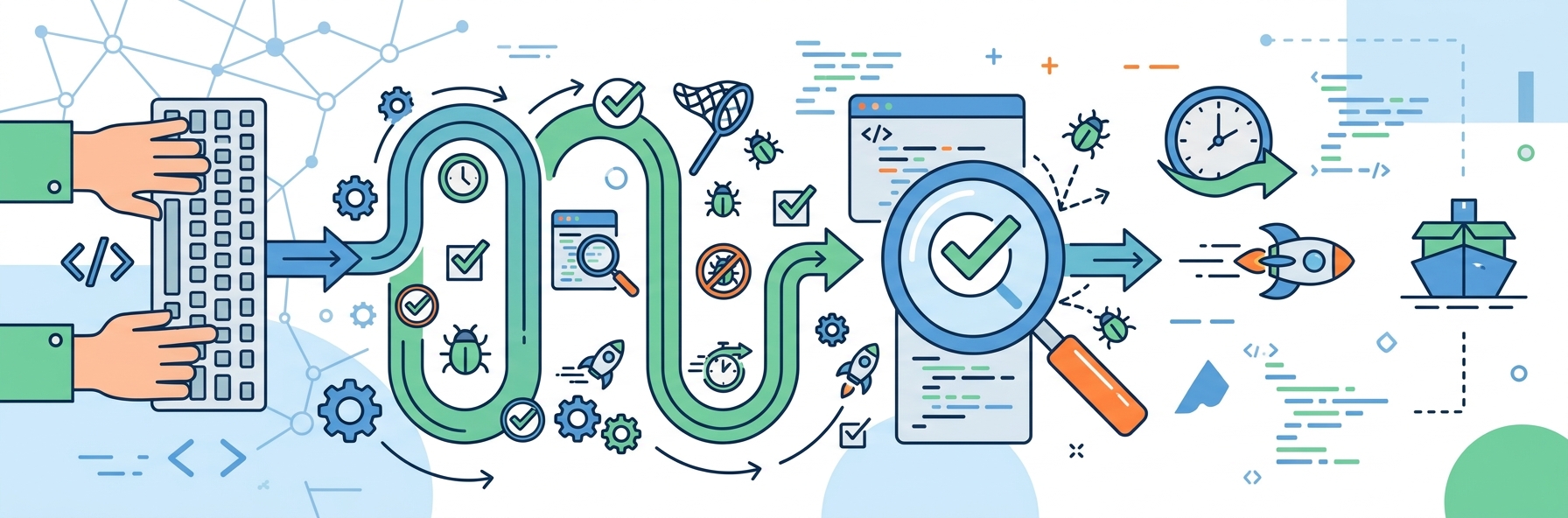
Testing no longer belongs at the end of a development cycle. Continuous testing in DevOps operates as an automated layer running alongside code changes, pulling test execution into the same pipeline that handles builds and deployments. Every time a developer commits code, a test suite fires automatically, reports results, and flags failures before they compound. This setup treats testing as a first-class part of development, not an afterthought. Teams that adopt this model stop treating testing as a handoff phase and start treating it as a feedback loop.
When developers get that kind of real-time signal, they write code with immediate visibility into whether their changes break anything downstream. The pipeline structure also makes it easier for organizations to grow testing coverage without proportionally increasing headcount. When developers integrate continuous testing in DevOps into their workflows, they catch regressions within minutes rather than days, cutting out the costly delays that come from discovering defects late in the release cycle.
The Role of Automated Feedback in CI/CD
Continuous integration and continuous delivery pipelines are what make automated feedback possible in practice. Each time a developer pushes a change, the pipeline compiles the code, runs unit tests, executes tests across components, and returns a pass or fail status, often within minutes. That speed matters because it keeps developers in context; a developer who gets feedback within ten minutes can trace a failure directly to the change they just made, while one who waits 48 hours for a manual report has already moved on to three other tasks. And that cognitive shift, from "I remember writing that" to "what was I even doing there", adds real time to debugging.
Automated feedback also creates a consistent record of code health over time. So teams can spot patterns: which areas of the codebase break most often, which test categories catch the most defects, where coverage is thin. That data drives smarter investment in test development rather than guesswork.
Catching Defects Earlier With Shift-Left Testing
Shift-left testing is the practice of moving quality checks earlier in the development lifecycle, closer to where code is actually written. In a traditional workflow, testing begins after a feature is complete. But in a continuous testing model, tests run from the moment code is committed, sometimes even earlier, through pre-commit hooks and static analysis.
This approach means defects surface at their smallest and cheapest point. A logic error caught in unit testing takes a developer a few minutes to fix. The same error found after testing across components, performance testing, and user-acceptance review can require rework touching multiple parts of the system. The financial case is clear. But the workflow benefit goes beyond cost: developers who catch their own bugs early build better habits, write cleaner code, and rely less on a separate testing team to catch mistakes they could’ve prevented themselves. Shift-left testing changes the culture of quality, not just the timing of it.
Ways Continuous Testing Improves Software Development Workflows
The workflow improvements from adopting continuous testing are measurable and consistent across team sizes and technology stacks. Teams that implement it effectively report shorter feedback loops, more predictable release schedules, and significantly less time spent on reactive debugging. The improvements don’t all arrive at once, though. They compound as test coverage grows, automation matures, and the team builds confidence in the pipeline’s ability to catch problems before they reach production.
Understanding how continuous testing improves software development workflows means looking at two concrete areas: how it affects release velocity and how it changes long-term maintenance costs. Both are direct consequences of integrating testing into the build process rather than running it as a separate, time-delayed activity.
Faster Release Cycles Without Sacrificing Quality
Release velocity is one of the most visible benefits of continuous testing. Teams without automated pipelines often face release bottlenecks where testing becomes the longest phase in the cycle; a two-week sprint can produce solid code in twelve days and then spend two more days sitting in manual testing queues. Continuous testing eliminates that bottleneck by running tests in parallel with development. Releases that once took three to four weeks can compress to days or even hours, depending on pipeline maturity and test coverage depth.
And here’s the thing many teams underestimate: speed doesn’t require a tradeoff with quality. Because tests run on every change rather than on a release candidate at the end, issues get caught earlier and more reliably. GE Healthcare publicly reported cutting testing time from 40 hours down to just 4 hours after implementing automated continuous testing, a 90% reduction in labor that also accelerated their release cycles without introducing new defects. Honestly, numbers like that make the case better than any abstract argument could.
Reduced Maintenance Costs Over Time
Maintenance cost is where continuous testing pays dividends that don’t always show up on a development dashboard but are very visible on an annual budget. Software that ships without adequate test coverage accumulates technical debt quickly. Bugs discovered in production require hotfixes, which are expensive to write, test, and deploy; support escalations consume engineering time that could go toward feature work. Legacy codebases without test suites become fragile, where every change risks breaking something else.
Continuous testing prevents this decay by keeping a test suite active and current throughout the development lifecycle. As the codebase changes, the tests evolve with it, and platforms that use self-healing test logic can automatically adapt to minor UI or API changes without requiring manual updates. The trick is getting that test suite healthy early, before the debt piles up. Teams spend less time fixing broken tests and more time building new features. That shift in how engineering hours get allocated is one of the clearest signs that a continuous testing workflow is actually working.
Conclusion
Continuous testing changes software development workflows by moving testing from a delayed checkpoint into an active, automated layer that runs throughout the entire build process. The benefits aren’t theoretical: faster release cycles, earlier defect detection, lower maintenance costs, and a codebase that stays healthier over time. Teams that understand how continuous testing improves software development workflows don’t treat it as a tooling decision alone. It’s a structural change in how development, testing, and deployment connect. The shift-left approach catches bugs before they compound, automated pipelines replace manual queues, and test suites that evolve with the code prevent the technical debt that slows teams down over the long term. If your team still treats testing as a final gate, the pipeline model is worth a close look.
Published: August 22, 2026