The best vulnerability management tool depends on where the process is failing. If the organization cannot reliably discover and assess its assets, scanner coverage comes first. If it already has several scanners but still cannot decide what to fix, prioritization and remediation coordination become the more useful buying criteria.
Check Point Exposure Management is worth shortlisting for the second problem, particularly when existing controls can reduce exposure while a permanent fix is scheduled. Tenable, Qualys, and Rapid7 are relevant starting points for assessment-led programs. Orca and Wiz deserve attention when the most important vulnerabilities sit in cloud workloads and need cloud context.
These nine options cover assessment, prioritization, and risk reduction. The table distinguishes their starting roles so a cross-tool remediation platform is not mistaken for a like-for-like replacement for every scanner.
How the comparison was assembled
The list starts with assessment-led products, moves through device and cloud contexts, and finishes with cross-tool prioritization and remediation approaches. Tenable leads the assessment discussion; Check Point appears in the later group because the illustrated buying need is using existing findings and controls to reduce exposure. These roles overlap, so the exact package and integration scope remain part of the comparison.
Recommendations use official product pages and documentation. No hands-on performance benchmark was conducted. This article was prepared for a Check Point content project; product numbers aid navigation and do not represent independent scores.
Match the tool to the bottleneck
Tool |
Starting role |
Most important fit check |
|---|---|---|
Tenable |
Assessment and broader exposure context |
Required scanners, assets, and platform components |
Qualys VMDR |
Asset discovery and vulnerability workflow |
Assessment coverage and remediation dependencies |
Rapid7 Exposure Command |
Assessment with unified asset and risk context |
Essentials versus Ultimate scope |
Microsoft Defender Vulnerability Management |
Device and software exposure management |
Licensing and supported assessment methods |
Orca Security |
Cloud vulnerability and exposure context |
Cloud accounts, workloads, and runtime scope |
Wiz |
Cloud risk connected through a security graph |
Required cloud and application coverage |
CrowdStrike Falcon Exposure Management |
Adversary-informed exposure prioritization |
Data sources and remediation workflow |
Check Point Exposure Management |
Cross-tool prioritization and risk reduction |
Scanner inputs, control integrations, and approvals |
Zafran |
Prioritization, mitigation, and remediation coordination |
Existing controls and workflow integration |
1. Tenable
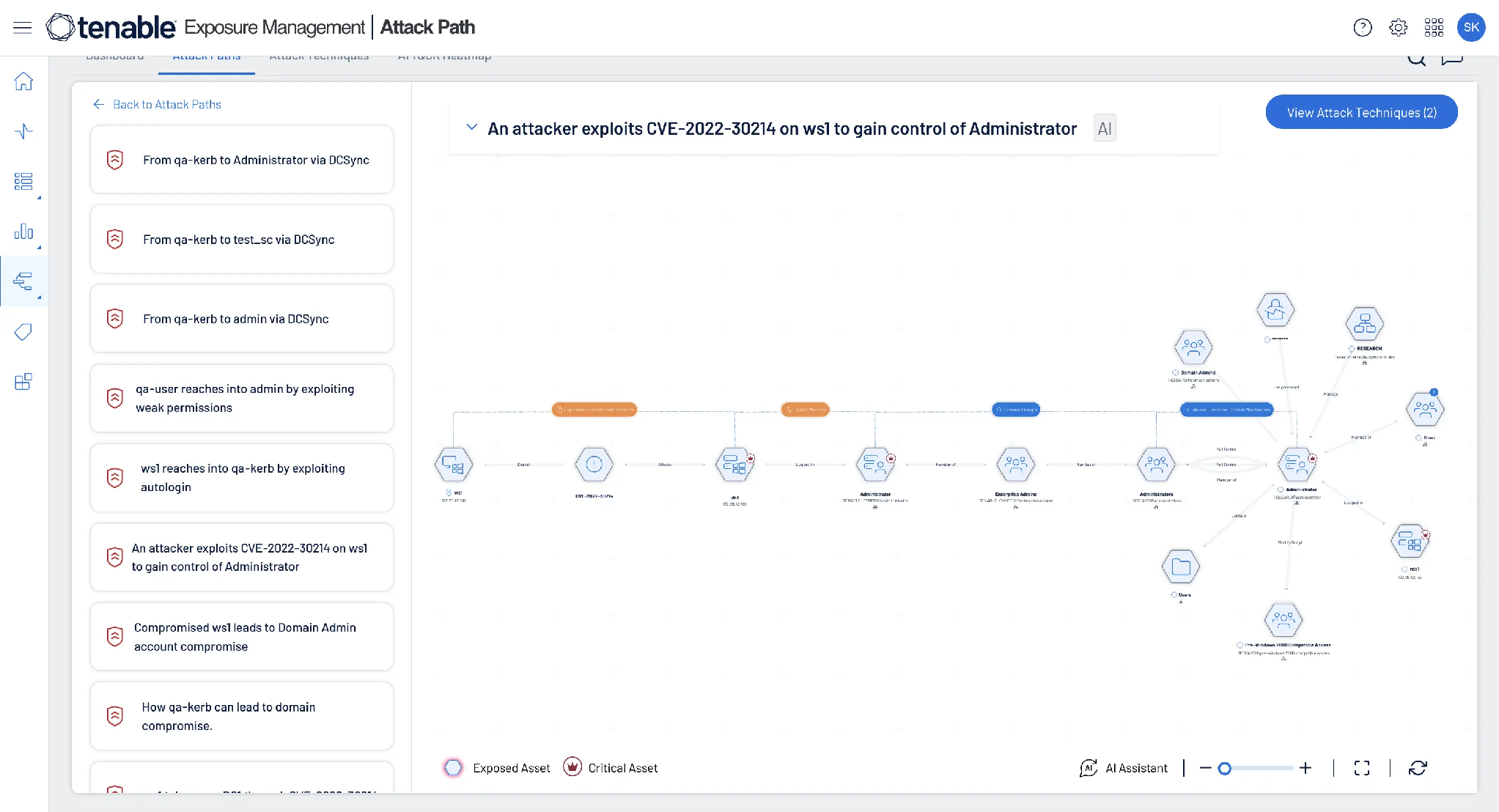
Published product interface. Tenable’s published attack path view illustrates how asset relationships can inform prioritization. Source.
Tenable is a relevant starting point for organizations that need vulnerability assessment connected to a wider exposure view. Its portfolio includes assessment products and the Tenable One platform, which brings asset and exposure context together. Official product information.
The buying decision should specify the actual components rather than treating Tenable One, Nessus, and every associated product as one interchangeable license. Start with the asset classes the team must assess and the deployment method for each. Then follow a finding into prioritization, ownership, and verification. Tenable is particularly useful to compare when assessment breadth is the core requirement, but a broader platform purchase should be justified by the additional decisions that its consolidated view enables.
2. Qualys VMDR
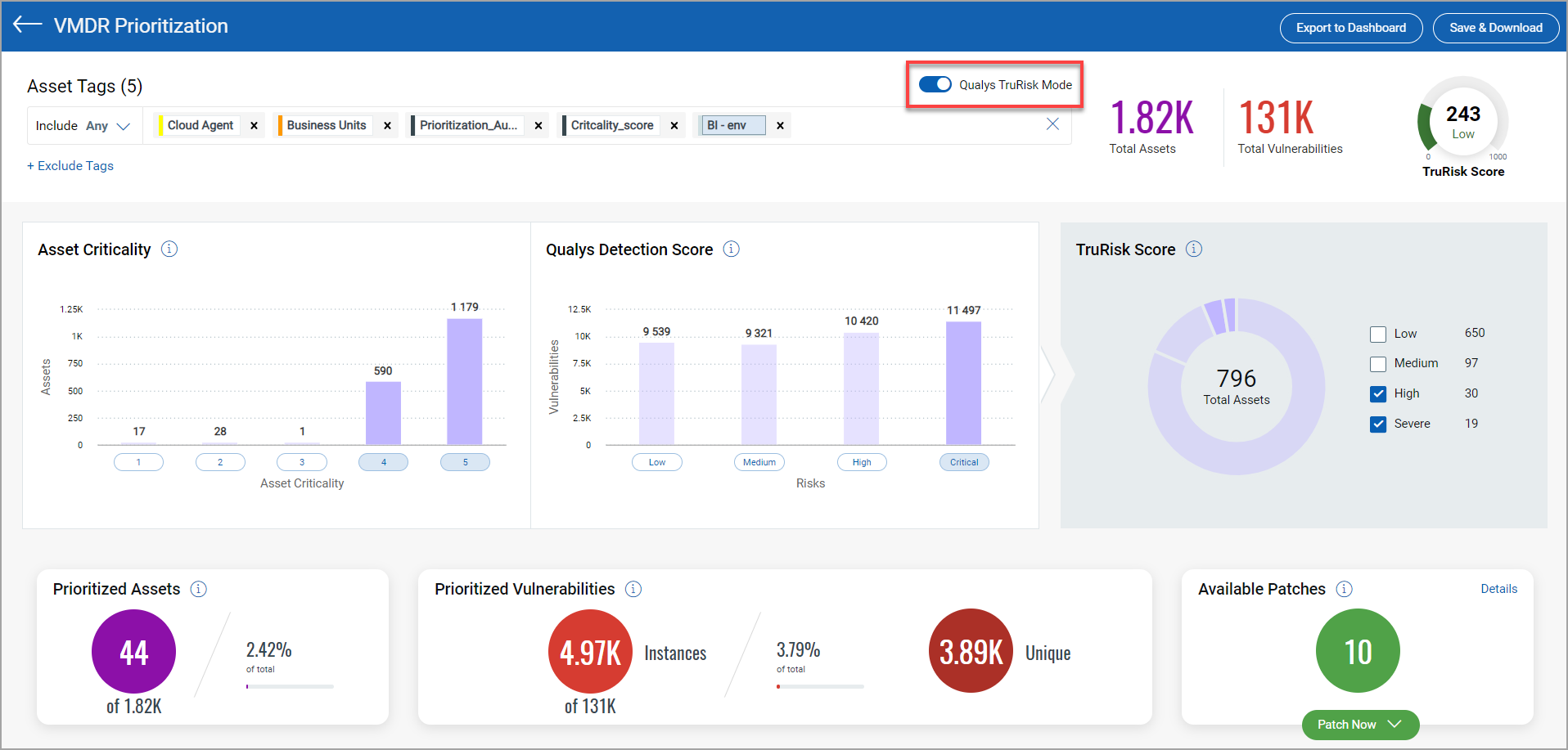
Documentation screenshot. Qualys’s documented threat detection and prioritization interface. Source.
Qualys VMDR is a candidate for teams seeking an asset and vulnerability workflow within the Qualys platform. Its scope centers on vulnerability management, detection, and response, making it relevant to organizations that want assessment findings to feed a consistent operational process. Official documentation.
Use representative assets rather than a narrow demonstration subnet. Include the operating systems, remote devices, and infrastructure types that create real work for your team. Confirm the assessment method and refresh behavior for each. Also identify which remediation actions are included in the proposed package and which depend on other components or integrations. The practical purchase is the complete workflow your team needs, not the product name alone.
3. Rapid7 Exposure Command
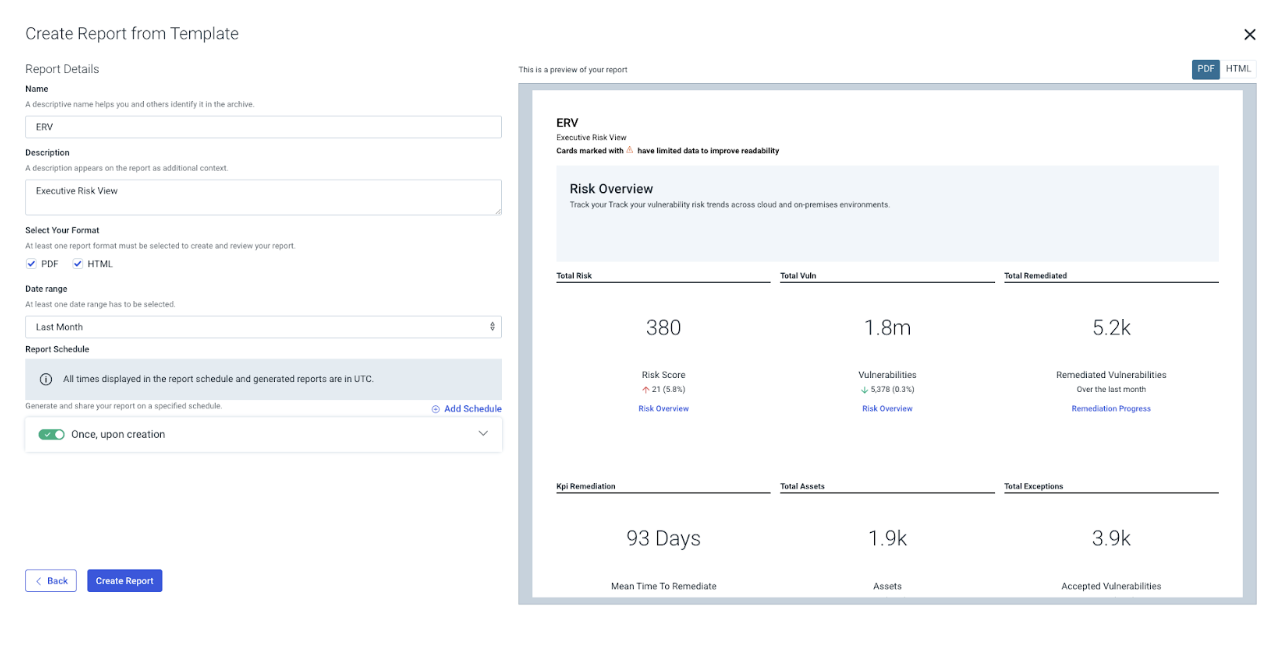
Documentation screenshot. Rapid7’s documented executive risk report creation dialog, illustrating a reporting step in the exposure workflow. Source.
Rapid7’s documentation connects Exposure Command with Surface Command’s asset visibility and adds vulnerability, risk, and compliance context. It describes both native findings and third-party sources. The published package comparison distinguishes Essentials from Ultimate, with important differences in cloud and application capabilities. Official documentation.
This makes Rapid7 a useful option for teams that need assessment and a unified view of assets in the same operating process. Map the required capabilities to the proposed package before comparing prices. During a trial, select a finding whose asset appears in several data sources and inspect the consolidated record. Then follow the remediation workflow to establish whether the assigned owner can understand and act on the finding without rebuilding its context.
4. Microsoft Defender Vulnerability Management
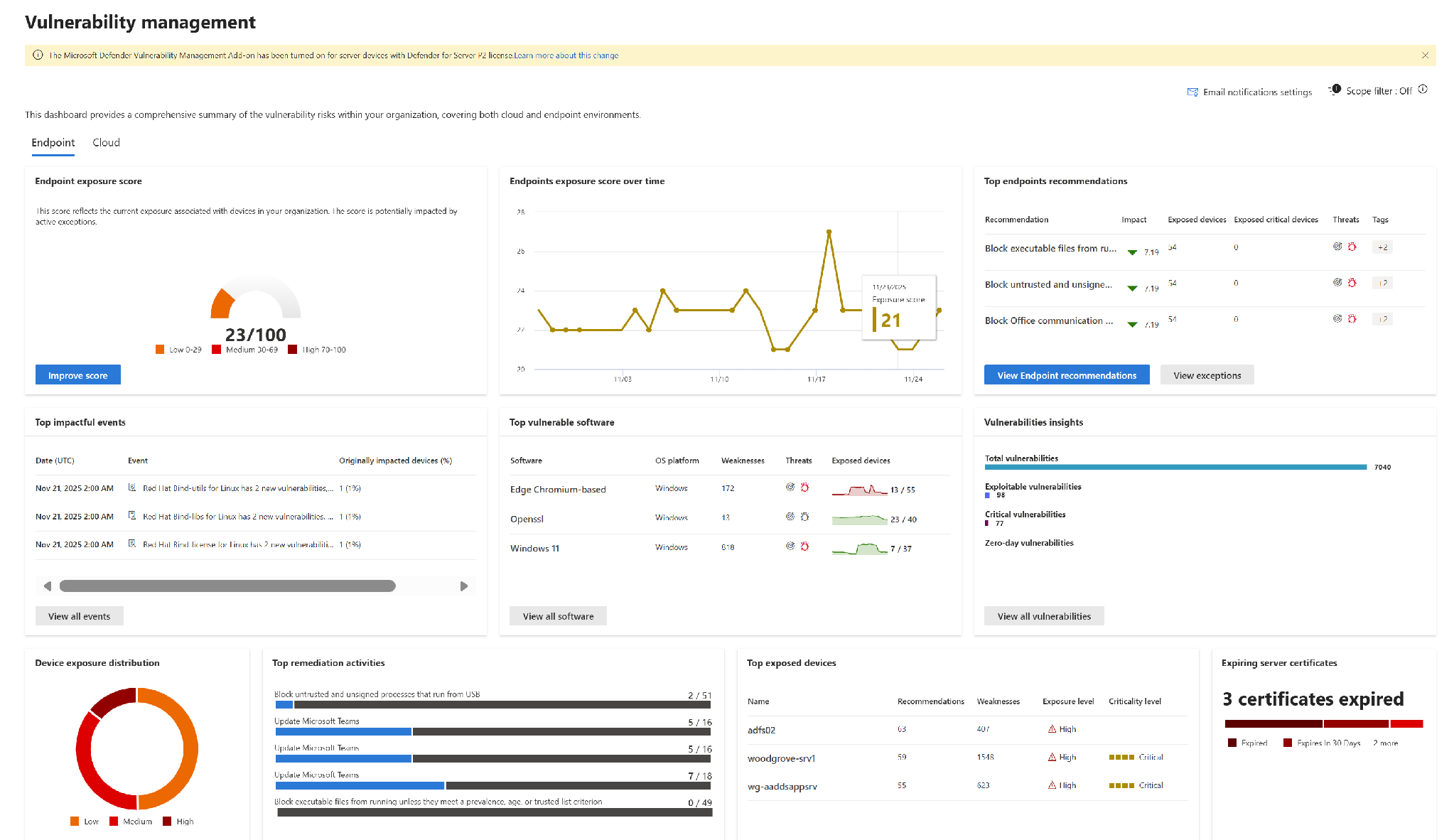
Documentation screenshot. Microsoft Defender Vulnerability Management’s documented overview dashboard. Source.
Microsoft Defender Vulnerability Management is relevant to teams whose exposure work centers on devices, installed software, and security recommendations. Microsoft documents asset discovery and assessment capabilities, threat-informed prioritization, and remediation workflows, with features depending on the licensed offering and supported platform. Official documentation.
The evaluation should include devices that are not continuously on the corporate network, as well as the operating systems actually in use. Confirm the source of assessment data and the features available under the intended license. Follow a recommendation into the team’s existing endpoint or IT workflow. This is a strong comparison point for device-focused operations, while cloud application and other specialized asset requirements should be checked explicitly.
5. Orca Security
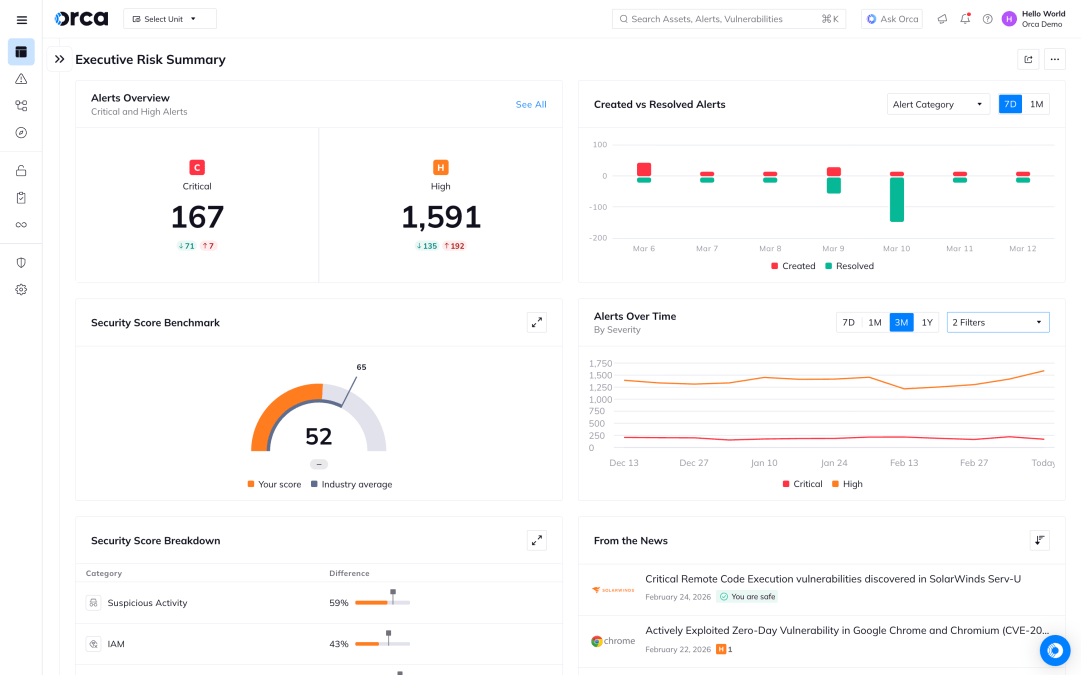
Published product interface. Orca’s published cloud risk dashboard. Source.
Orca is a relevant choice when vulnerability prioritization depends on cloud context. Its platform combines cloud visibility with contextual risk analysis, including relationships among assets and exposures. It describes agentless assessment alongside additional runtime capabilities. Official product information.
The useful question is whether a vulnerability becomes more actionable when connected to workload reachability, identity, and surrounding cloud configuration. Select a finding that looks severe in isolation and inspect the evidence supporting its priority. Confirm which deployment components produce the required context. Orca should be assessed against the cloud environments in scope; do not assume that a strong cloud security platform automatically replaces assessment of every traditional endpoint or network asset.
6. Wiz
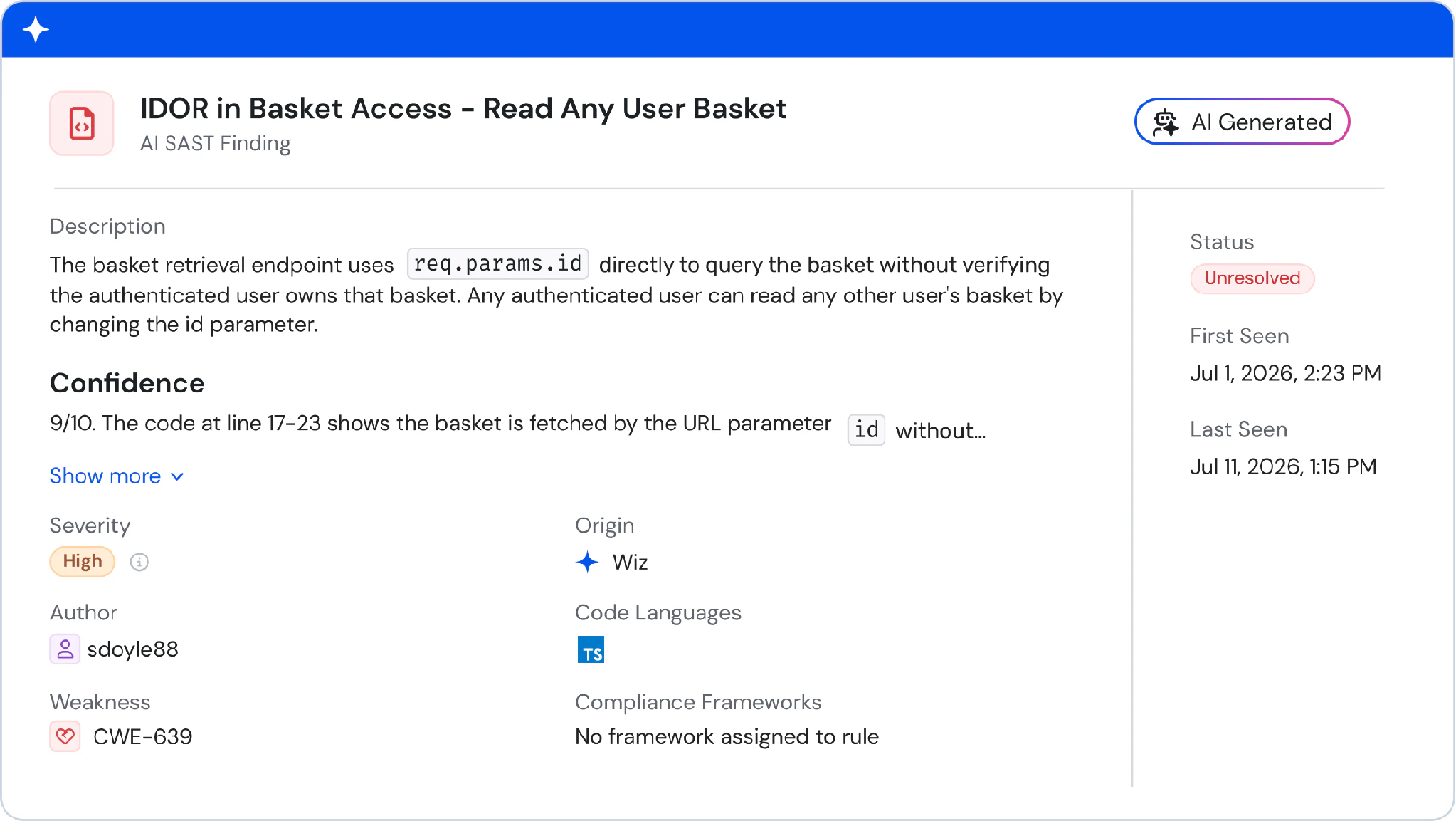
Published product interface. Wiz’s published code finding view illustrates one part of its broader code-to-cloud context. Source.
Wiz is worth comparing when cloud vulnerabilities need to be understood alongside identity, data, and application relationships. Its platform emphasizes a security graph and the connection between cloud and application risk. That is useful when teams need to explain why one issue creates a more consequential path than another. Official product information.
Use a real cloud workload with a known owner and inspect the relationship evidence behind a prioritized finding. The owner should be able to see what needs to change and why. Confirm the required coverage and components for runtime, code, and cloud functions. The graph is most valuable when it changes remediation decisions, so judge the trial by actionable findings rather than the visual complexity of the relationships displayed.
7. CrowdStrike Falcon Exposure Management
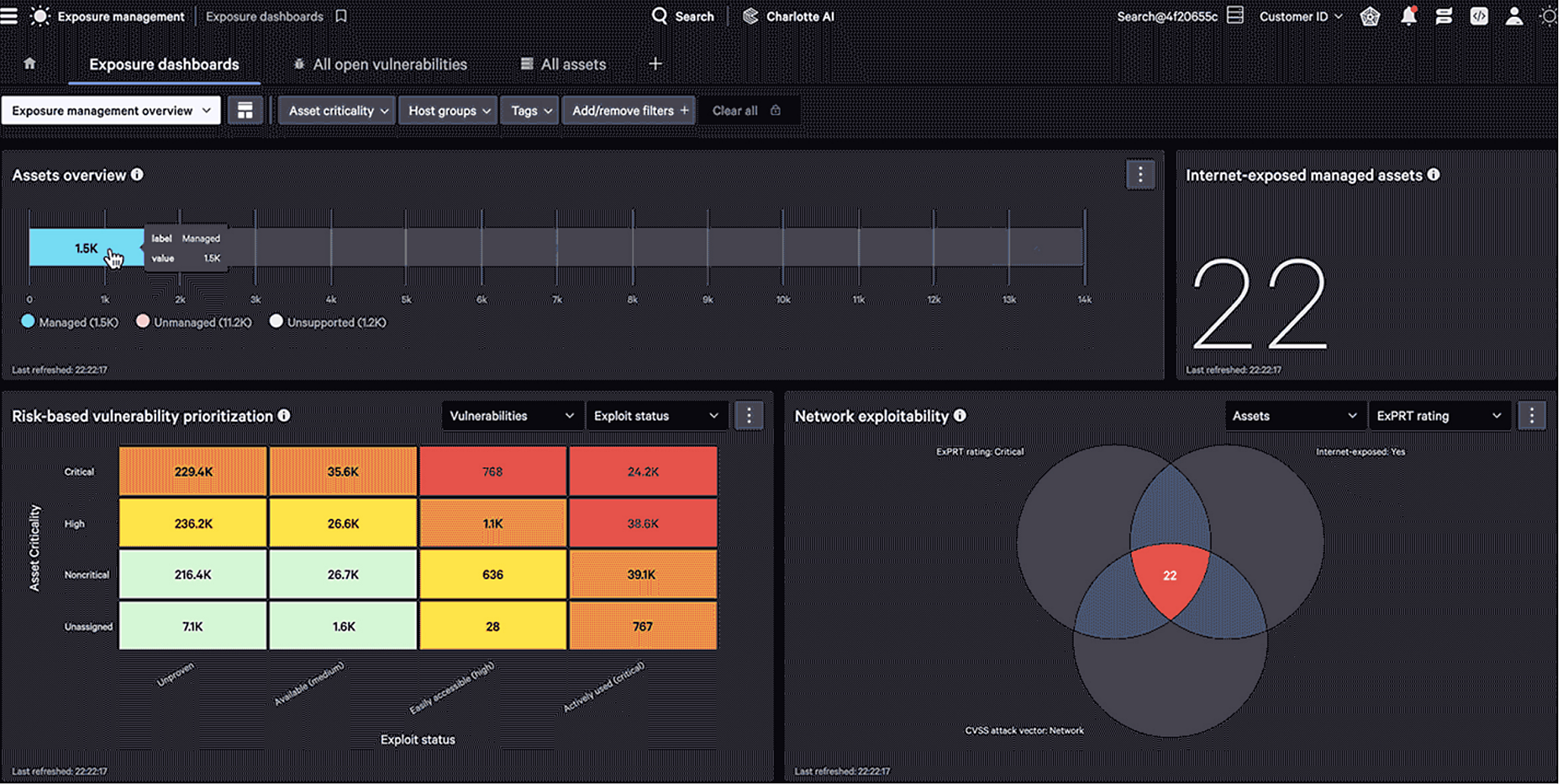
Published product interface. CrowdStrike’s published exposed asset view. Source.
CrowdStrike positions Falcon Exposure Management around exposure context informed by adversary activity, exploitability, and attack paths. Its current materials describe support extending beyond a single endpoint-only view, including third-party endpoint environments. Official product information.
This makes it relevant to organizations that want vulnerability work to use threat context already important to their security operations team. Verify the data sources needed for the proposed deployment and inspect the explanation behind a priority decision. Then test the handoff to remediation. Avoid assuming either that every capability requires an existing Falcon endpoint deployment or that every third-party environment receives identical coverage; the exact integration is the relevant unit of comparison.
8. Check Point Exposure Management
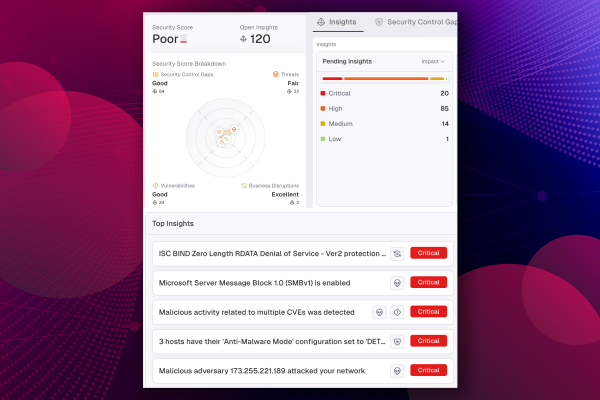
Published interface composite. Check Point’s published exposure and remediation view. Mitigation status should be tracked separately from a permanent fix. Source.
Check Point is a strong candidate when vulnerability findings already exist but the team needs to connect them to threat context and available controls. Its exposure management portfolio describes prioritization and remediation using security telemetry and integrations. The TEM documentation explicitly describes compensating controls such as configuration changes, access restrictions, and virtual patching. Official product information.
That makes Check Point’s vulnerability management approach particularly relevant when a business-critical asset cannot be patched immediately. Confirm the scanner sources, the connected controls, and the approval process for the proposed action. Keep permanent remediation and mitigation as separate states. A successfully applied compensating control can reduce exposure while the underlying vulnerable component remains present.
9. Zafran
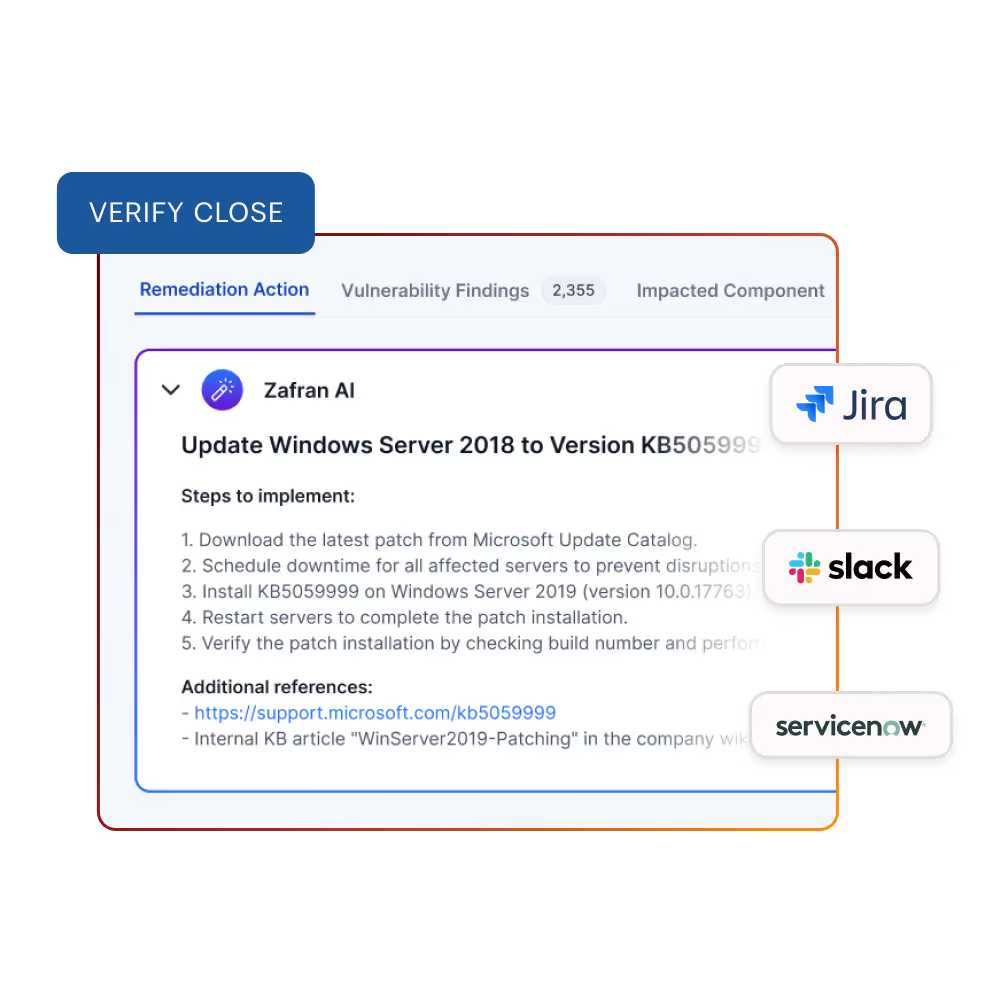
Vendor interface illustration. Zafran’s published remediation task illustration. Source.
Zafran is relevant when a team needs to combine vulnerability findings with runtime context, existing controls, and remediation work. Its platform describes aggregation, enrichment, mitigation, and remediation coordination. This makes it a useful comparison for organizations with an established tool estate and a backlog that remains difficult to reduce. Official product information.
Test a finding that can be mitigated through an existing control while a root-cause fix is planned. Inspect the evidence supporting the action, the approval path, and the resulting task ownership. Keep the accepted state explicit: mitigated, permanently fixed, or still open. Also verify the current discovery and assessment scope rather than relying on older descriptions of the product as solely an aggregation layer.
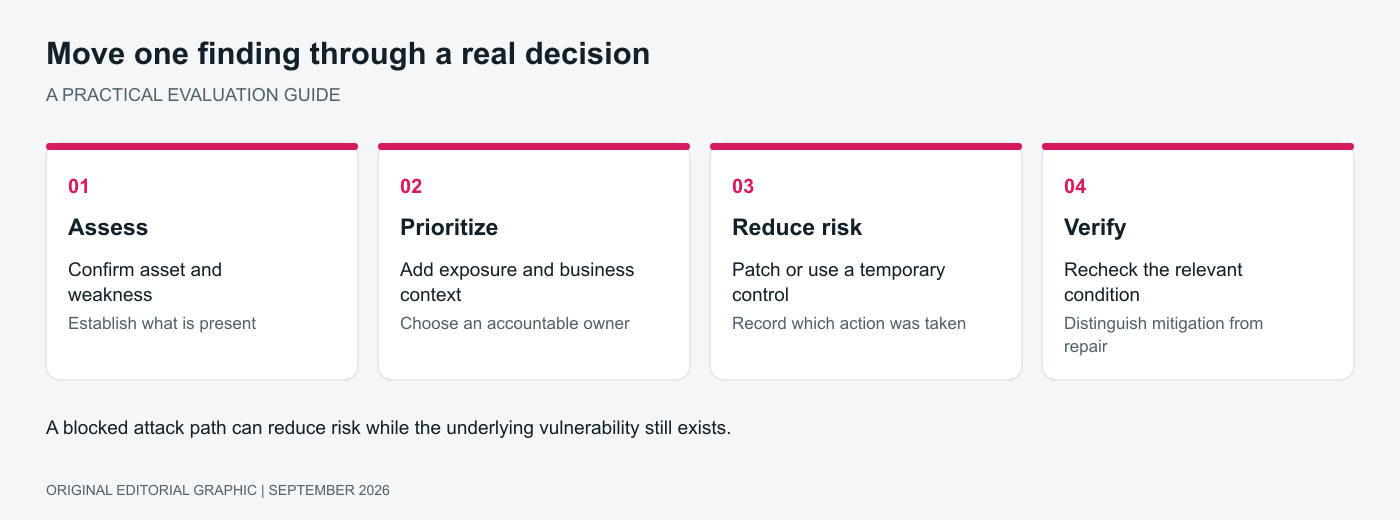
Original editorial graphic. Distinguish a compensating control from permanent remediation.
Run a trial around one remediation cycle
Choose a representative group of assets with known owners. Include a critical business system, a cloud workload, a remote endpoint, and an asset with a delayed patch window. Record the existing findings and the reasons the team has not resolved them.
Ask each shortlisted product to identify the next actions and explain its evidence. A good priority decision should connect technical severity with exposure, threat relevance, asset importance, and available controls. Where information is missing, the product should make the gap visible rather than present a precise-looking score as certainty.
Then execute an approved test change and verify the outcome. If the action is a patch, confirm the vulnerable state is gone. If it is a mitigation, confirm the relevant exposure has changed and preserve the remaining permanent fix. Measure the time required from the security team and the asset owner, because operational effort is part of the result.
Which option should lead the shortlist?
Start with Tenable, Qualys, or Rapid7 if assessment coverage is the immediate weakness. Compare Microsoft closely for device-centered work and Orca or Wiz for cloud-centered work. When the organization already has findings but needs to connect them to practical risk reduction, put Check Point and Zafran into that workflow test, with CrowdStrike relevant where adversary context is central.
The best purchase is the one that improves a complete remediation cycle. A larger vulnerability count, a lower dashboard score, or a closed ticket is not sufficient evidence on its own that the exposure was reduced.
Published: November 27, 2026