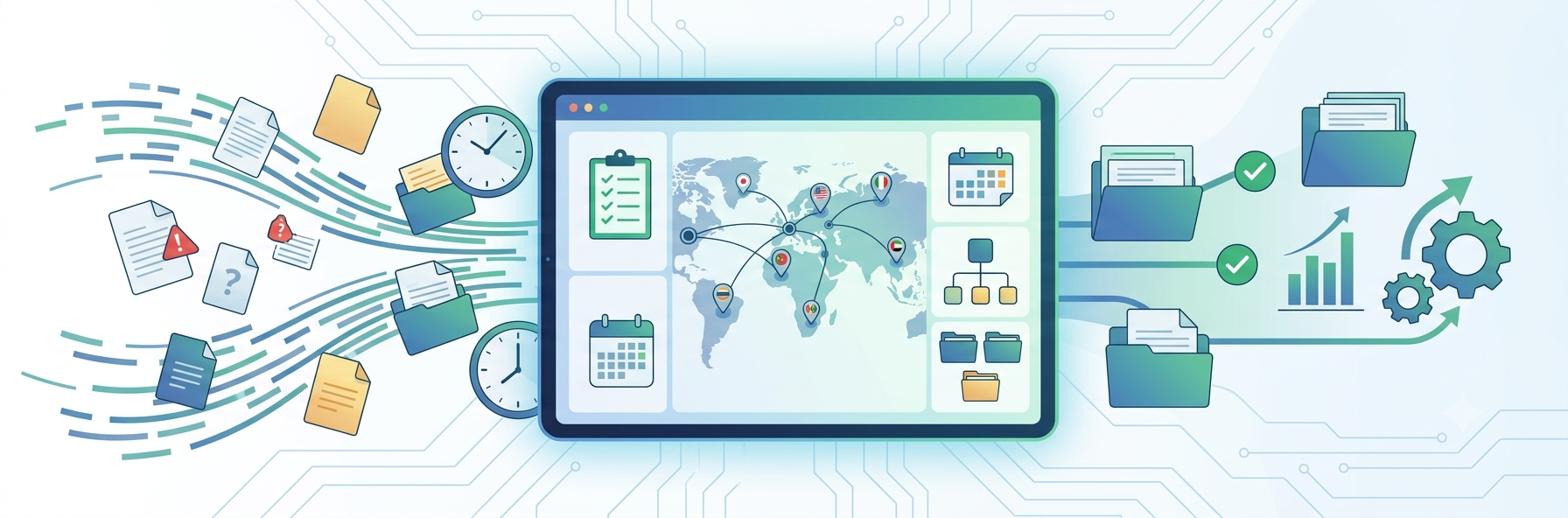
Companies that hold entities in several countries manage a steady stream of filings, board records, ownership updates, tax references, and local registrations. Each jurisdiction sets distinct deadlines, document forms, and approval steps. That patchwork can strain legal, finance, and operations teams when records are stored in separate systems. One central system brings those moving parts into view, helping decision makers track obligations, confirm status, and support growth with stronger administrative control.
A Unified View
Cross-border entity oversight weakens when corporate data lives in email threads, local drives, and disconnected spreadsheets. A global entity management system provides teams with a single place to review incorporation records, officer changes, filing calendars, and ownership details across jurisdictions. With that shared reference point, staff can quickly compare current facts, answer internal questions with confidence, and reduce confusion before expansions, restructurings, financings, or routine compliance work begins.
Clear Records
Reliable oversight starts with accurate core records. Each entity should hold its current legal name, registration number, address, directors, tax identifier, and document history in a single file. Shared access limits version disputes that waste time during audits or bank reviews. It also reduces the risk that separate departments will act on mismatched information when preparing approvals, confirming signatures, or responding to regulatory requests.
Local Rules
Every country, state, or province applies its own filing timetable and documentary standards. Some require annual returns, while others expect license renewals, shareholder updates, or beneficial ownership statements. A central record helps teams match each duty to the correct entity and place. That structure supports planning and lowers the chance of missed dates that can trigger penalties, delays, or registration problems.
Better Governance
Directors and senior leaders need dependable entity data before approving major actions. A single system can show ownership structure, active jurisdictions, outstanding filings, and unresolved governance issues without waiting for custom summaries. That immediate access strengthens oversight because problems appear earlier. Legal teams can also explain exposure in plain language, using current records rather than old snapshots assembled under pressure.
Shared Access
Entity administration rarely sits with a single department. Finance may need payment evidence, tax staff may need registration details, and operations may need local records before leasing space. Central access, controlled by role, lets each group reach the information it needs without opening every file to everyone. That balance improves coordination and helps protect sensitive corporate material from unnecessary handling.
Audit Readiness
Audits become more difficult when papers must be gathered from several jurisdictions at short notice. A central repository improves readiness by consolidating certificates, minutes, filings, and ownership changes into an ordered record. Reviewers can trace activity more easily, while internal teams answer requests with fewer delays. Strong document discipline also supports due diligence in financing, acquisitions, or disposals.
Expansion Plans
Entering a new market usually brings formation steps, registrations, local appointments, and continuing reporting duties. A central system helps teams consistently follow a process each time a new entity is added. That repeatable method reduces uncertainty during growth. It also gives leaders a clearer view of administrative demands before market entry, which helps with cost estimates, timing decisions, and staffing plans.
Vendor Control
Many businesses depend on outside counsel, filing providers, and registered agents in multiple jurisdictions. Central oversight provides internal teams with a single place to monitor vendor instructions, invoices, deadlines, and completed work. That matters because service levels can vary by location. When records are consolidated, companies can review performance more fairly and assess whether external support aligns with cost and timing expectations.
Data Confidence
Corporate decisions depend on the quality of the information behind them. Centralization builds confidence by establishing a single naming standard, a single update process, and a single document trail for each entity. Consistency matters during lender reviews, regulator requests, and leadership reporting. It also helps teams trust the records they use every day, improving speed while preserving control over sensitive administrative details.
Long-Term Value
One central system does more than organize paperwork. It supports a steadier operating model for businesses that maintain entities across borders and need dependable records every day. With a single source for duties, documents, and status, teams spend less time manually verifying basics. That practical gain grows over time because clearer accountability, stronger visibility, and better record quality help companies stay compliant while preparing for future expansion.
Conclusion
Managing entities across borders requires disciplined recordkeeping, clear accountability, and reliable visibility across all jurisdictions. A central system gives companies one place to track duties, documents, approvals, and corporate changes without relying on scattered files. That structure helps teams respond faster, reduce administrative errors, and support better governance. As organizations grow, one trusted source becomes a practical foundation for compliance, planning, and informed executive oversight.
Published: July 24, 2026