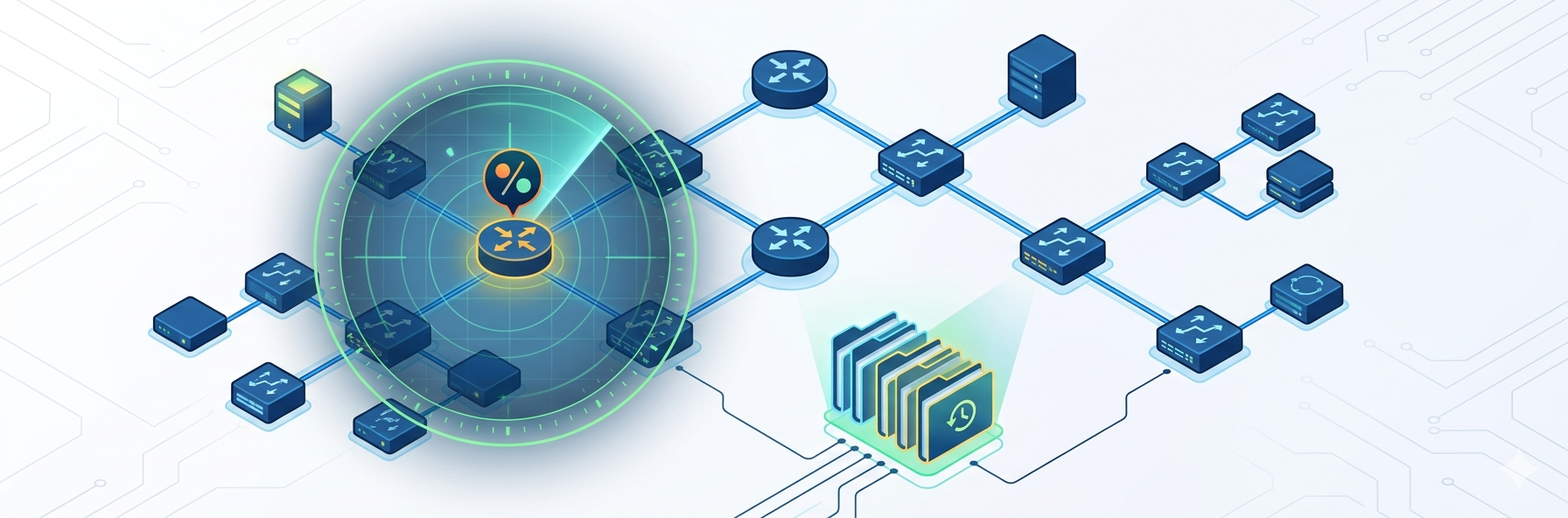
Configuration monitoring tracks the settings applied to network devices and documents how those settings change over time. Network devices rely on precise configuration values for routing behavior, access control rules, and device communication. Continuous observation of these configurations maintains infrastructure accuracy through clear detection of configuration updates and preservation of reliable records of device settings.
Configuration monitoring works alongside structured processes such as network configuration management (NCM) that collect configuration data and store device settings for review. Monitoring systems capture configuration snapshots, store historical versions, and highlight differences when changes occur. This ongoing observation ensures that administrators can confirm whether device settings remain aligned with operational policies.
Why Configuration Monitoring Matters
Infrastructure environments contain many interconnected devices that rely on precise configuration settings. Continuous monitoring helps maintain consistency and ensures operational integrity.
Visibility Across Infrastructure
Configuration monitoring provides administrators with a clear view of device settings across the network. By collecting configuration data and comparing it with stored records, monitoring systems reveal changes that occur over time. This visibility helps maintain awareness of infrastructure conditions and supports informed oversight.
Detection Of Unauthorized Changes
Misconfigurations sometimes introduce vulnerabilities or operational disruptions. Monitoring tools identify changes as they occur, allowing administrators to detect unauthorized modifications quickly. Real-time change detection helps maintain security standards and prevents unnoticed alterations from affecting the infrastructure.
Reliable Audit Trails
Configuration monitoring also records device interactions and configuration updates. These records create a reliable audit trail that supports compliance requirements and internal reviews. Tracking configuration activity ensures that administrators can trace when changes occurred and understand the circumstances behind them.
Key Capabilities Of Configuration Monitoring
Effective infrastructure oversight relies on several monitoring capabilities that support reliability, documentation, and operational control.
Configuration Backup And Comparison
-
Automatic backups preserve configuration versions for each device.
-
Version comparisons reveal differences between current and previous settings.
- Stored backups allow quick restoration if configuration errors occur.
Compliance Monitoring
-
Monitoring systems compare device configurations with defined policies.
-
Compliance checks ensure infrastructure settings align with regulatory or organizational standards.
- Detailed reports summarize configuration status and highlight deviations.
Device Discovery And Inventory Tracking
-
Automated discovery identifies devices connected to the infrastructure.
-
Inventory tracking records hardware details and configuration information.
- Accurate inventories improve oversight and ensure all components remain accounted for.
Supporting Stable Infrastructure Operations
Configuration monitoring strengthens infrastructure management by maintaining accurate configuration records, detecting changes, and supporting compliance oversight. These capabilities reduce uncertainty and help administrators maintain stable system behavior across complex networks.
Within broader operational strategies such as network configuration management (NCM), monitoring acts as a continuous verification layer. It confirms that device settings remain aligned with expected configurations while preserving detailed records of every modification. When monitoring operates consistently, infrastructure teams maintain control over configuration integrity and ensure that networks remain secure, traceable, and operationally stable.
Professional Services For Configuration Monitoring
Professional services support the structured setup and operation of configuration monitoring within network environments. Specialists evaluate device configurations, organize monitoring rules, and establish processes that capture configuration changes across infrastructure. This structured approach ensures configuration data remains accurate and that monitoring systems consistently record device settings.
Ongoing professional oversight also maintains monitoring reliability as network environments evolve. Experts manage configuration archives, validate monitoring policies, and ensure configuration changes remain properly documented. Consistent management preserves configuration history, supports compliance documentation, and strengthens infrastructure oversight.
Published: March 24, 2026