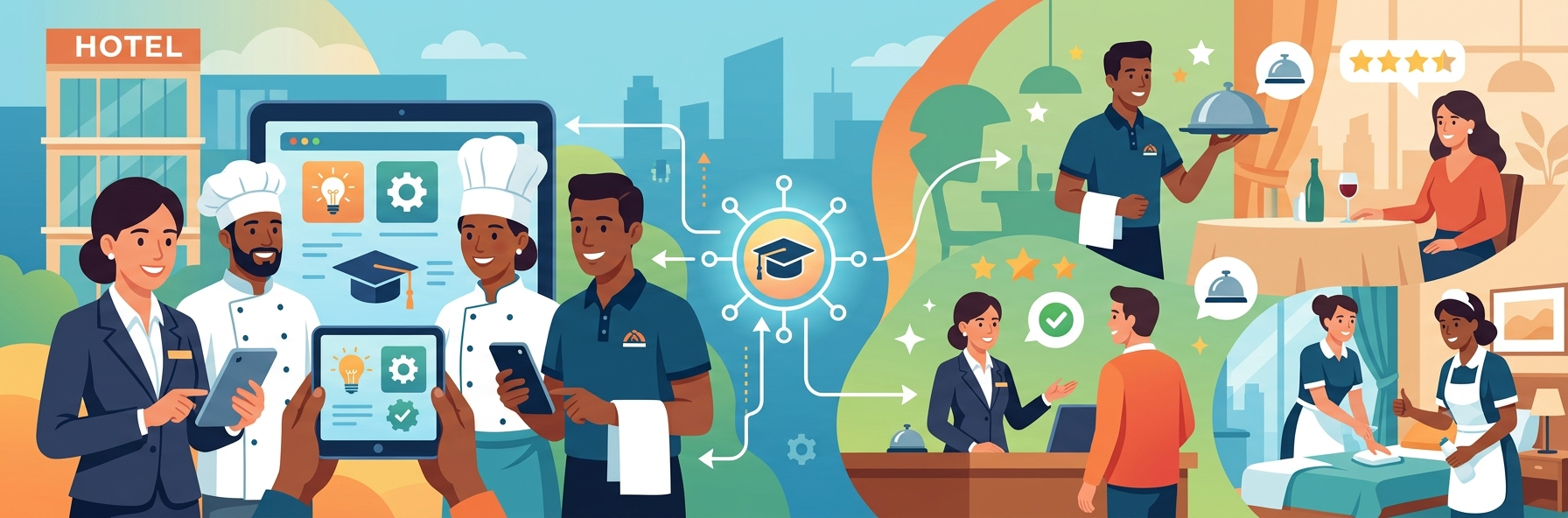
The challenges that hospitality organizations face are unique; as a result, they need dedicated attention. Staff must provide excellent guest services while also being compliant and agile to changes in service standards. An industry-specific learning management system solution can meet these needs by continuously addressing learning gaps and enhancing operational productivity, ensuring a sustained delivery of consistent quality service.
Addressing Unique Training Needs
Hospitality teams meet with guests every single day. Management must provide their staff with customer service, food safety, and housekeeping standard training. An LMS for hospitality helps ensure that the learning modules align closely with what happens on the job. It ensures training remains relevant and effective as staff learn about practical solutions that apply directly to their work.
Ensuring Consistent Service Quality
The bedrock of guest satisfaction is consistency. A customized learning management system promotes consistency in service delivery across all departments of your organization. With standardized materials available to staff, you can ensure that everyone meets expectations. This methodology fills the service gaps and adds to the brand image.
Supporting Compliance and Safety
Regulatory requirements in hospitality require more than just meeting protocols. Staff must consistently adhere to health, safety, and data privacy standards. A solution tailored to your industry delivers the latest on compliance issues for hotels, restaurants, and other hospitality environments. This approach helps to minimize the circumstances that result in violations and lawsuits.
Facilitating Fast Onboarding
Staff turnover is high in hospitality. To keep work flowing smoothly, you must onboard new employees quickly and effectively. Role-oriented training modules help in enabling orientation through a dedicated learning management system. Providing immediate resources for new hires reduces pressure on existing staff members and allows new employees to become productive much more quickly.
Empowering Career Growth
The basis of an effective employee recognition and retention strategy is continuous learning. An industry-based platform encourages professional development through higher-level courses and qualifications. Employees can follow specific skill sets, paving the way for any internal promotions or cross-functional job roles. An investment in learning lifts spirits and solidifies loyalty.
Adapting to Technological Advances
A growing number of hospitality businesses are using digital tools to facilitate bookings, payments, and communication with guests. Training programs should also progress with this approach. A beneficial learning management system designed specifically for an industry keeps its content updated for the latest technologies and processes. Staff members are well-informed and confident that they are conducting their daily tasks the right way.
Enhancing Multilingual Training
Hospitality teams might have employees from all walks of life. Offering multilingual training helps everyone understand key procedures and expectations. An industry-specific solution offers support for multilingual content, which becomes essential to make inclusive learning accessible for all staff members.
Tracking Progress and Performance
Managers will also have to supervise team performance and ensure that team members complete their training. Specialized platforms provide advanced reporting functionalities, allowing supervisors to analyze knowledge gaps and measure readiness among staff. This systematic approach enables more focused coaching and improved workforce planning.
Reducing Operational Disruptions
Costly mistakes are often made by mistreated employees, so well-trained employees increase profitability. An LMS configured for a particular industry or segment corrects errors by reinforcing best practices and standard procedures. Less disruption equals more seamless operations and happier guests.
Promoting a Positive Work Culture
An excellent training program develops teamwork and camaraderie. When staff feel supported, they remain engaged and strive to provide exceptional service. A practical learning management system focused on the industry promotes collaboration by engaging them in group learning activities and peer feedback while creating a sense of community in the team.
Conclusion
Hospitality organizations can gain considerably from a hospitality-built learning management system. It ensures that staff receive training in relevant areas and that they maintain and improve the same high standards of service for patrons. The offerings of both products and venues will continue to remain competitive and part of the new normal.
Published: June 9, 2026