Team collaboration tools have never been better. Whiteboards, kanban boards, sticky notes, mind maps – the visual layer of how teams think, plan, and communicate has become genuinely sophisticated. Ideas get captured. Projects get structured. Brainstorms produce outputs that actually go somewhere.
What often gets lost in the transition from collaboration to execution is the connection between the ideas the team generated and the outcomes the business is tracking. A whiteboard session produces a plan. The plan produces tasks. The tasks get done – and three months later, nobody is entirely sure whether any of it moved the number that mattered.
This is the gap that costs teams the most, and it sits between two categories of software that rarely talk to each other: the collaboration tools where thinking happens, and the goal-tracking tools where accountability lives.
Two Layers That Most Teams Keep Separate
The collaboration layer is where teams do their best thinking. Visual tools – whiteboards, kanban boards, mind maps – remove the friction between an idea and its expression. They’re built for the moment when a team is figuring something out, not reporting on it.
The spatial, informal nature of a canvas is exactly what’s needed when the goal is to explore rather than to execute.
The goal-tracking layer is different in almost every respect. It’s structured, not open-ended. It’s focused on outcomes rather than ideas. It operates on a weekly cadence rather than a project rhythm. And it requires a discipline of ownership and honest progress reporting that is the opposite of the generative, low-stakes energy that makes collaboration tools work.
Both layers are necessary. Keeping them permanently separate is where most teams lose the thread between what they planned and what they delivered.
Where the Breakdown Happens
The most common version of this breakdown looks like this. A team runs a planning session – whiteboard out, sticky notes everywhere, genuine energy in the room. The session produces a clear set of priorities for the quarter.
Those priorities get documented and shared. And then the team moves into execution, and the connection between the priorities agreed in the session and the work being done week to week gradually disappears.
Not because the team stopped caring. Because the planning session and the execution cadence live in different systems with different rhythms and different owners. The whiteboard is owned by the planning meeting. The tasks are owned by the project management tool. The goals – if they’re tracked at all – are owned by a spreadsheet that someone updates when someone else asks how things are going.
The result is a team that collaborates well and executes inconsistently. The ideas are strong. The accountability structure isn’t there.
Closing the Loop
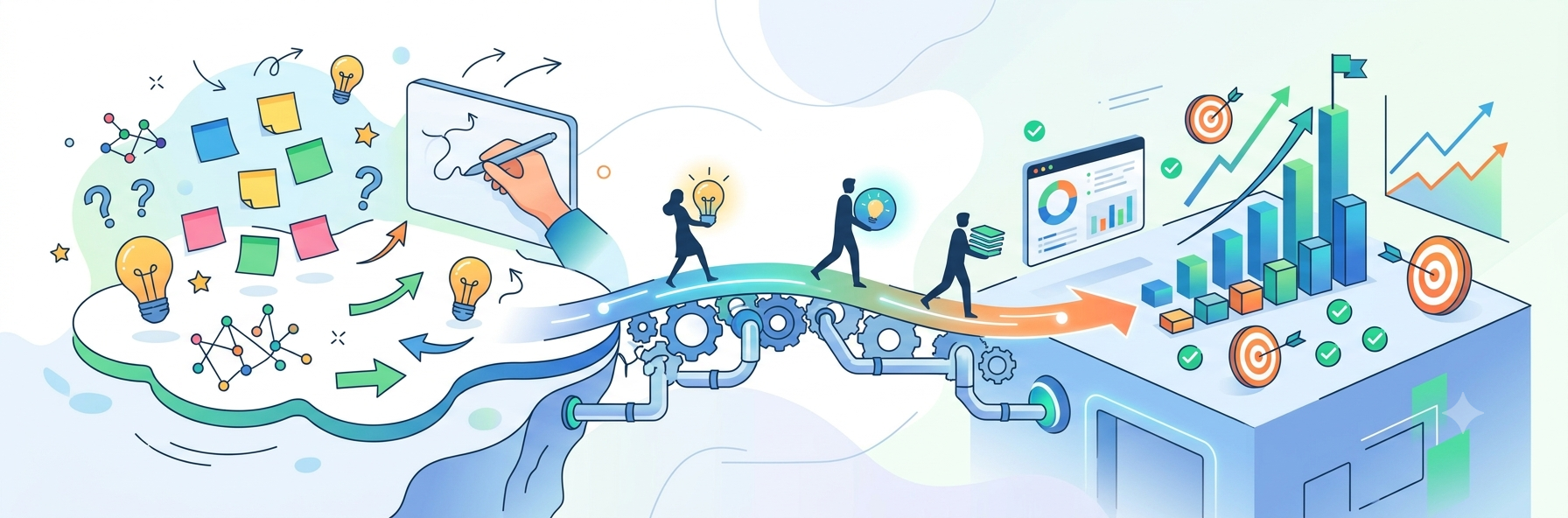
The teams that close this gap do it by treating collaboration and goal-tracking as sequential rather than parallel activities – two stages of the same process rather than two separate processes that happen to involve the same people.
The collaboration stage – the whiteboard session, the mind map, the kanban planning – produces the thinking. What are we trying to achieve this quarter? What are the biggest bets? What needs to change for the business to get where it’s going? These are questions that visual, open-ended collaboration tools are built to answer.
The goal-tracking stage takes the output of that thinking and structures it into something accountable – specific outcomes, named owners, a weekly check-in cadence that keeps progress visible throughout the quarter rather than summarised at the end of it.
OKR platforms like OKRs Tool are built specifically for the second stage. They’re not collaboration tools – they’re accountability tools. The objective gets set, the key results get assigned to owners, and the weekly nudge keeps the team honest about whether the work being done is actually moving the outcomes that were agreed in the planning session.
The connection between the whiteboard and the dashboard is what most teams are missing – and building that connection is where execution discipline actually gets created.
What This Looks Like in Practice
For a product team using Weje for sprint planning and quarterly brainstorming, the practical workflow looks something like this. The quarter opens with a planning session on the canvas – objectives get mapped, priorities get debated, the team reaches alignment on what the next thirteen weeks are for.
The output of that session – the key bets, the strategic priorities – gets translated into OKRs in the goal-tracking system before the first week of the quarter is over.
From that point, the two tools serve different purposes at different moments. Weje stays live as the space where the team’s thinking happens – new ideas, mid-cycle pivots, retrospective brainstorms. OKR software handles the accountability layer – weekly check-ins, progress tracking, the mid-cycle review that catches drift before it compounds into a missed quarter.
Neither tool does the other’s job. Both are necessary for the process to hold.
The Habit That Makes It Work
The single most important habit in connecting collaboration to outcomes is the translation step – the moment where the output of a planning session becomes a set of specific, measurable commitments with named owners and a review date.
Most teams skip or rush this step. The whiteboard session ends, the energy disperses, and the priorities that felt so clear in the room get preserved as a photo of the sticky notes rather than as a structured set of commitments the team is accountable for.
Taking thirty minutes at the end of every planning session to translate the output into owned, trackable goals – before anyone closes their laptop – is the habit that changes what happens in weeks five, six, and seven of the quarter. The ideas don’t disappear into the canvas. They become the work.
Published: August 5, 2026