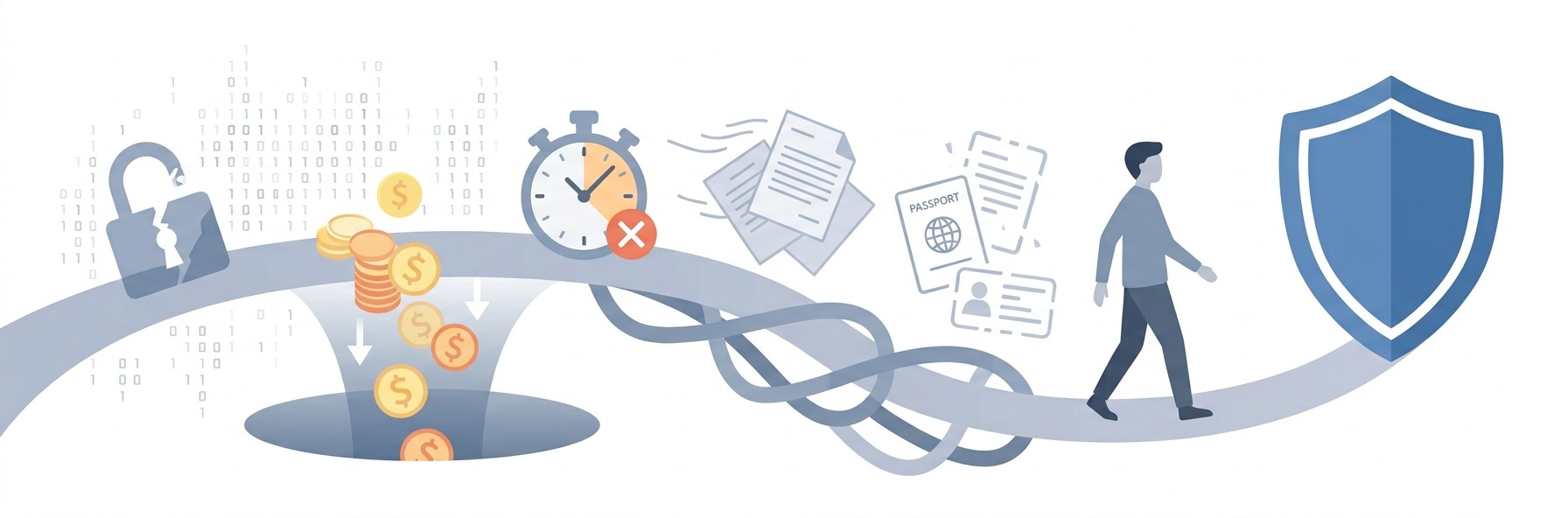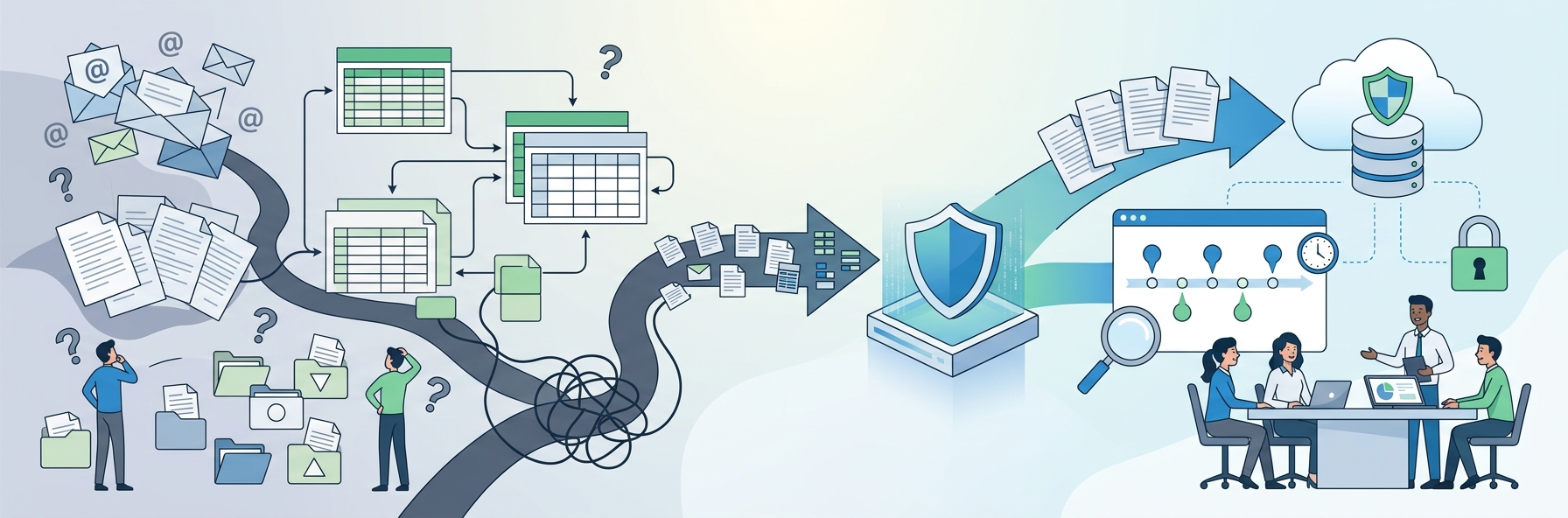
Almost no board sets out to run governance through email chains and a shared spreadsheet — it just accumulates that way. A tracker gets used for action items because it happened to be open. Board packs go out as attachments because that’s the established habit. Minutes end up in whichever folder someone last saved them to. None of it feels urgent until the board crosses a certain size or complexity, at which point all of it becomes a problem simultaneously.
These five signs tend to show up right around that threshold.
1. No one can agree which version is current
If meetings routinely involve a moment of "wait, is this the agenda from Tuesday or the updated one?" — version control has already broken down. Email was never built to track document revisions, and once more than a few people are annotating the same file, the cracks show. Dedicated board software fixes this structurally: one current version for everyone, with a visible history of what changed and when.
2. Meeting prep takes longer than the meeting
If a board secretary or staff liaison spends hours assembling and formatting a board pack — chasing late submissions, converting file formats, double-checking every attachment made it into the right email — the process itself has become the real bottleneck. Purpose-built platforms usually compress this dramatically by letting materials load directly into a structured agenda instead of being manually stitched together.
3. There’s no reliable trail of who saw what
This becomes a genuine liability the moment an audit, dispute, or new director’s question requires historical context. Email can’t reliably confirm a director opened a document before voting on it, and a spreadsheet certainly can’t either. It’s one of the clearest markers that a board has outgrown its current tools — proper board management software treats this audit trail as a built-in feature rather than something bolted on later.
4. Security depends on individual habits, not a system
If sensitive materials — financials, legal matters, personnel issues — live in personal inboxes, downloaded laptops, or forwarded personal email accounts because someone missed the original message, security is riding entirely on individual discipline. That’s a shaky foundation for confidential governance material, especially as board membership turns over and old messages never get cleaned up.
5. Growth has outpaced what a shared folder can handle
A five-person board meeting quarterly can often limp along on a shared drive and good habits. A fifteen-person board with multiple committees and more frequent meetings generally can’t. When an organization grows — more directors, more committees, more regulatory obligations — but its systems stay the same, the mismatch shows up as missed materials, duplicated effort, and directors who quietly stop opening attachments because there are simply too many.
What tends to change after the switch
Individually, none of these signs feels dramatic — one confusing thread, one late pack — but together they create friction that boards eventually stop accepting. Organizations that move to dedicated board management software typically see the biggest improvement in exactly these areas: faster meeting prep, a defensible audit trail, and materials that stay organized as the board grows instead of becoming harder to manage.
Reading the pattern
If two or more of these signs feel familiar, the real question usually isn’t whether to move off email and spreadsheets, but when. The transition tends to be far less disruptive than boards expect going in — the actual risk is waiting until a missed document or a failed audit makes the decision for you.
Published: August 17, 2026