Most businesses don’t lose momentum because of one catastrophic mistake.
They lose it slowly.
A delayed response from sales. A production issue nobody flagged early enough. Teams are working toward different priorities. Managers are spending more time chasing updates than solving problems.
At first, these things seem minor. Over time, they compound into missed revenue, frustrated employees, and slower decision-making across the company.
The companies that scale well usually aren’t the ones with the most complicated systems. They’re the ones that create visibility early.
That’s where operational structure starts to matter.
The hidden cost of poor communication
As businesses grow, communication naturally becomes harder.
A 5-person company can solve issues instantly through casual conversations. A 50-person company can’t.
Without clear processes, information gets trapped between departments. Leadership loses visibility. Teams start reacting instead of planning.
This is especially common in operations-heavy industries like manufacturing, logistics, construction, healthcare, and enterprise services.
One missed issue on the floor can create delays that impact customers, vendors, and internal teams at the same time.
The problem is rarely effort.
The problem is alignment.
Why more meetings usually make things worse
A common reaction to operational chaos is adding more meetings.
Weekly syncs become daily calls. Teams spend hours reporting updates instead of actually fixing issues.
The irony is that most businesses don’t need more meetings.
They need better ones.
That’s why many operationally mature companies rely on structured tier meetings.
What are tier meetings?
Tier meetings are short, structured operational meetings designed to surface issues quickly, improve accountability, and keep teams aligned throughout the day.
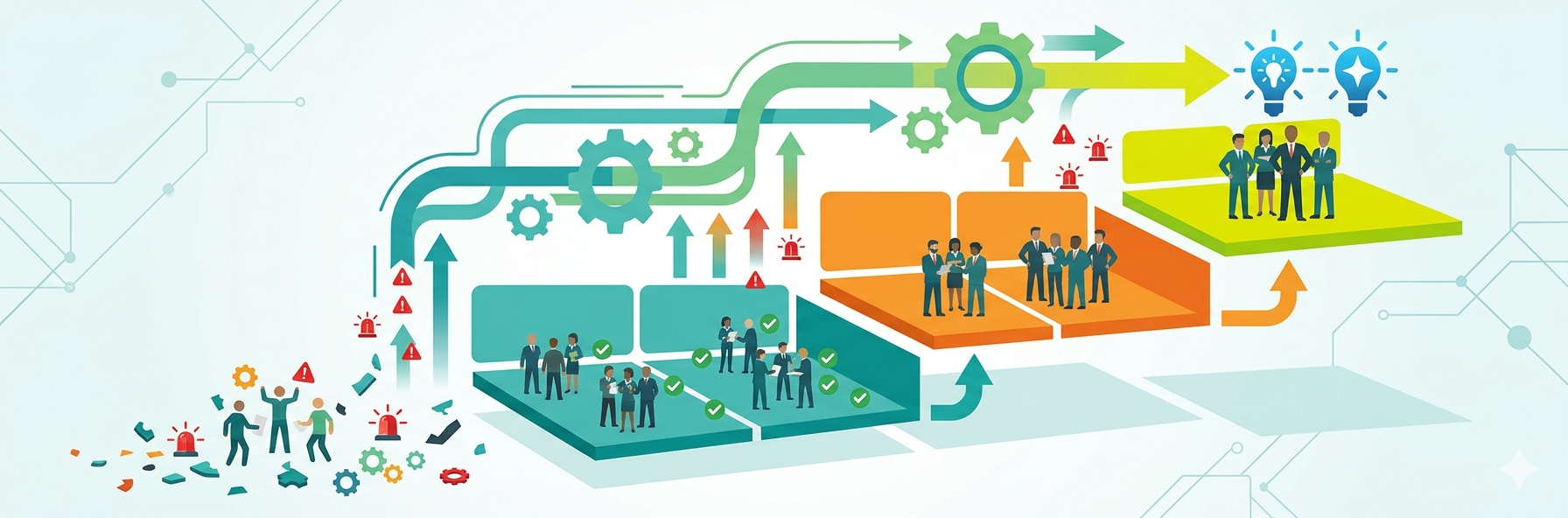
Instead of one large meeting where everything gets discussed at once, tier meetings happen across different organizational levels.
For example:
- Tier 1 might involve frontline staff reviewing daily blockers
- Tier 2 could involve department managers discussing escalated issues
- Tier 3 often focuses on leadership-level operational decisions
The goal is simple: identify problems early and move them to the right people fast.
When implemented correctly, tier meetings reduce communication gaps, improve response times, and help businesses make faster operational decisions without unnecessary complexity.
Companies using digital tools for tier meetings also gain something even more valuable: visibility.
EviView helps businesses manage tier meetings, track escalations, and improve operational communication without relying on scattered spreadsheets or endless email chains.
Operational discipline creates scalability
Many companies focus heavily on growth strategies but ignore operational discipline.
That becomes a problem later.
You can generate leads, hire salespeople, and increase demand, but if internal communication breaks down, growth starts creating stress instead of momentum.
Strong operations create consistency.
Consistency creates trust.
And trust is what allows businesses to scale without constantly operating in crisis mode.
Final thoughts
Operational efficiency is rarely about working harder.
It’s about creating systems that help people stay aligned, solve issues faster, and make smarter decisions consistently.
The businesses that grow sustainably usually aren’t the loudest or most aggressive.
They’re the ones that build operational clarity before chaos forces them to.
Published: May 29, 2026